Home Diploma in Nutrition

Diploma in Nutrition

Exploring nutrition, balanced diets, food hygiene and healthy lifestyle practices.

About the Course

The Diploma in Nutrition is a two-year programme that introduces students to food science, human nutrition, dietary planning and the relationship between food and health. The course explores nutrients, balanced diets, nutrition across different life stages, food hygiene and community nutrition awareness to build a foundation for nutrition-related support and education.

About the Department

The Nutrition Department develops awareness of healthy eating, nutritional requirements and the role of diet in health and wellbeing. Students are introduced to food and nutrition concepts, basic meal planning, food safety and communication approaches for sharing general nutrition awareness responsibly.

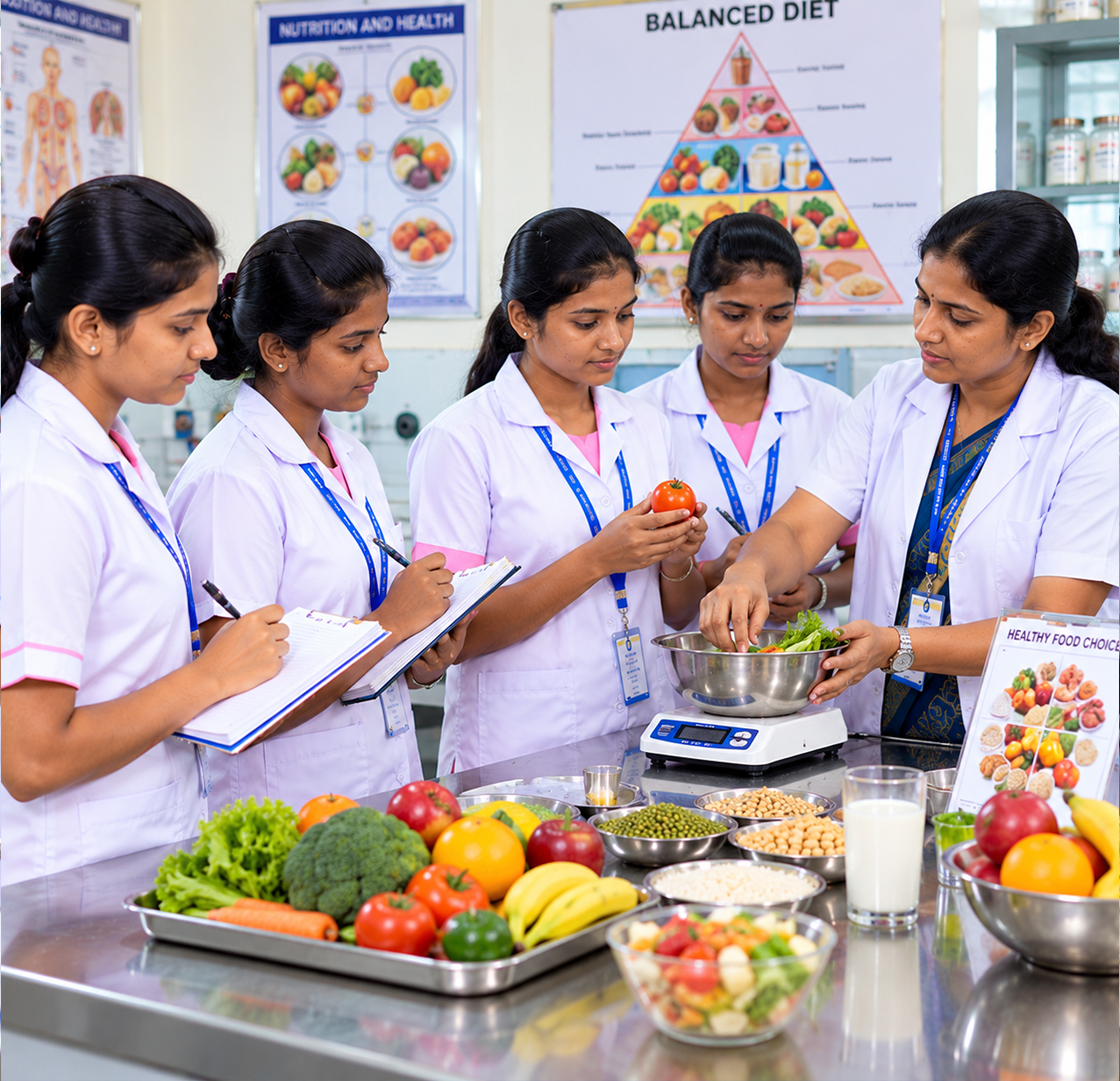
Students learning Diploma in Nutrition

Duration

2 Years

Eligibility

10th / +2 Pass or Fail / Any Degree

Confirm course-specific requirements with the institution.

Age Limit

16–35 Years

Key Areas of Study

Fundamentals of Nutrition

Introduction to nutrients, their functions and the importance of a balanced diet.

Food Science

Understanding food composition, preparation and basic food properties.

Human Nutrition

Exploring the relationship between nutrition, health and wellbeing.

Balanced Diet Planning

Learning introductory principles of meal planning and balanced food choices.

Nutrition Across Life Stages

Understanding general nutrition needs at different stages of life.

Food Hygiene & Safety

Following safe food handling, storage, cleanliness and sanitation practices.

Community Nutrition Awareness

Learning how to support general nutrition education and healthy-eating awareness.

Programme Overview

Course Objectives

To develop foundational knowledge of food, nutrients and balanced diets, and to introduce safe food practices and community nutrition education.

Programme Highlights

  • Two-year diploma programme
  • Co-educational course
  • Study of food science and human nutrition
  • Introduction to balanced diet planning
  • Focus on food safety and community nutrition awareness

Learning Outcomes

  • Identify major nutrients and describe their general functions.
  • Understand the principles of a balanced diet and basic meal planning.
  • Recognize how nutritional needs vary across life stages.
  • Apply basic food hygiene, handling and safety principles.
  • Support general nutrition-awareness activities while recognizing the limits of non-clinical advice.
Learning in Practice

Practical & Hospital Training

Learning activities may connect nutrition concepts with everyday food choices, food hygiene and general health-awareness programmes. Any clinical diet planning or therapeutic nutrition advice requires the appropriate recognized qualifications and professional authorization.

Career Opportunities

Career pathways are indicative and do not guarantee employment. Appointments and regulated duties depend on the qualification accepted by the employer, applicable recognition, registration and recruitment requirements. The supplied institutional document lists institute-wide eligibility categories of 10th, +2 pass/fail and any degree, with an age range of 16–35 years. Confirm course-specific admission requirements. Clinical dietitian roles may require further recognized qualifications.