Home Diploma in Medical Laboratory Technology (DMLT)

Diploma in Medical Laboratory Technology (DMLT)

Developing laboratory knowledge and practical skills for diagnostic testing and healthcare support.

About the Course

The Diploma in Lab Technology (DMLT) is a two-year programme that introduces students to medical laboratory operations, diagnostic testing principles and the careful handling of clinical samples. Students learn how laboratory services contribute to the healthcare process and why accuracy, cleanliness, safety and systematic working practices are important in diagnostic environments.

About the Department

The Medical Laboratory Technology Department focuses on scientific foundations, laboratory procedures, equipment awareness and safe working habits. The learning approach introduces students to common laboratory disciplines and the importance of specimen identification, handling, quality practices and responsible documentation.

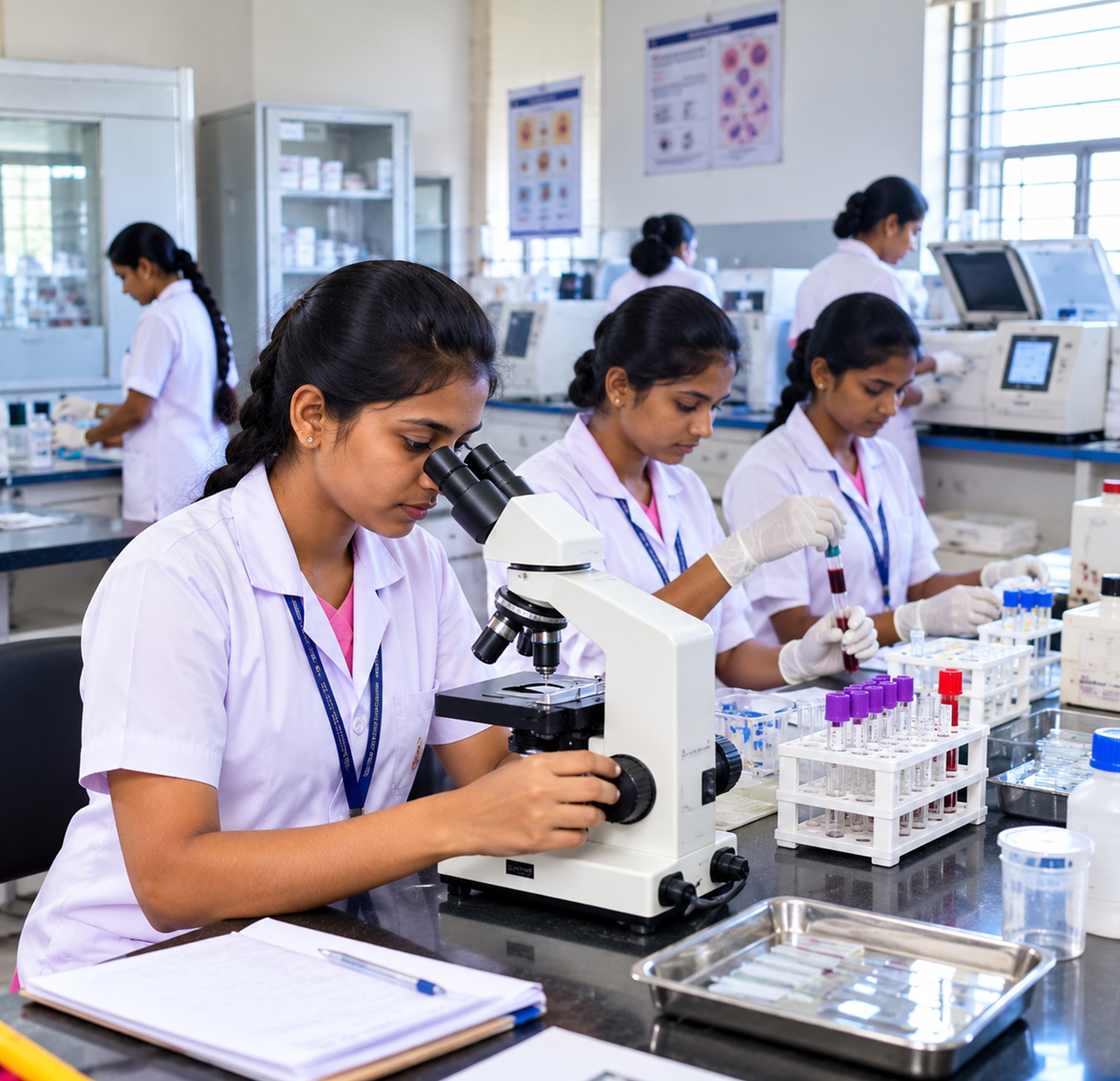
Students learning Diploma in Medical Laboratory Technology (DMLT)

Duration

2 Years

Eligibility

10th / +2 Pass or Fail / Any Degree

Confirm course-specific requirements with the institution.

Age Limit

16–35 Years

Key Areas of Study

Clinical Biochemistry

Introduction to biochemical investigations and the role of laboratory testing.

Microbiology Fundamentals

Understanding microorganisms and basic microbiology laboratory practices.

Haematology

Introduction to blood components and routine haematology investigations.

Sample Collection & Handling

Learning specimen identification, labeling, handling and processing principles.

Laboratory Equipment

Becoming familiar with common diagnostic laboratory instruments and their uses.

Laboratory Safety

Following hygiene, biosafety and safe laboratory working practices.

Quality Control Fundamentals

Understanding accuracy, consistency and basic quality practices in laboratory work.

Programme Overview

Course Objectives

To introduce the fundamentals of medical laboratory work and develop awareness of diagnostic procedures, specimen handling, laboratory safety and quality practices.

Programme Highlights

  • Two-year diploma programme
  • Co-educational course
  • Introduction to key diagnostic laboratory disciplines
  • Focus on specimen handling and laboratory safety
  • Practical learning and hospital exposure as stated by the institution

Learning Outcomes

  • Describe the role of medical laboratories in supporting diagnosis and healthcare.
  • Recognize basic concepts in clinical biochemistry, microbiology and haematology.
  • Understand safe specimen collection, identification and handling principles.
  • Identify common laboratory equipment and its basic purpose.
  • Follow laboratory hygiene, safety and introductory quality-control practices.
Learning in Practice

Practical & Hospital Training

The institution's supplied content states that practical training is provided in hospitals. Practical learning may introduce students to laboratory workflows, equipment awareness, specimen handling and safety routines. Specific training locations and the permitted scope of student practice should be confirmed with the institution.

Career Opportunities

Career pathways are indicative and do not guarantee employment. Appointments and regulated duties depend on the qualification accepted by the employer, applicable recognition, registration and recruitment requirements. The supplied institutional document lists institute-wide eligibility categories of 10th, +2 pass/fail and any degree, with an age range of 16–35 years. Confirm the course-specific admission requirements and recognition of the qualification with the institution.